
The Skeleton X-Ray Story TikTok Trend: How It Works and How to Make Your Own
The Skeleton X-Ray Story TikTok Trend: How It Works and How to Make Your Own
The skeleton X-ray TikTok trend caught a lot of creators off guard. One month it barely existed, and then suddenly a massive wave of skeleton-anatomy storytelling videos was flooding the For You Page. If you've seen these videos and wondered how they're made, or you're a creator who wants to jump on the format before it fully peaks, this is your guide.
We'll break down how the trend originated, what makes the format work from an engagement standpoint, and exactly how you can produce your own skeleton X-ray story videos in 2026.
What Is the Skeleton X-Ray TikTok Trend?
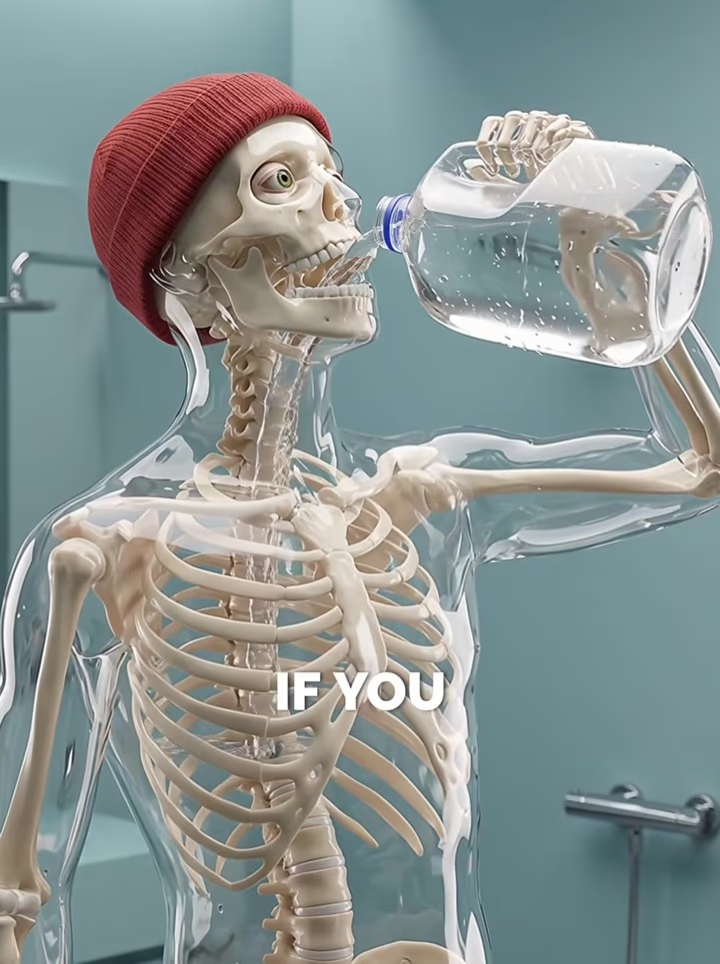
The skeleton X-ray story format presents a narrative from an unusual and deeply compelling perspective: the inside of a human (or sometimes animal) body. The visual style typically uses X-ray-like aesthetics - you see bones, skeletal structures, and body systems rendered in glowing whites and blues against a dark background - while a narrator tells a story, explains a medical situation, or walks through an emotional scenario from the skeleton's point of view.
What makes this format distinctive is the contrast between the clinical, anatomical visual and the very human (often emotionally charged) storytelling. That tension between form and content is what makes viewers stop scrolling.
The most successful videos in this trend tend to fall into a few categories: personal health stories (told as if the skeleton is recounting what happened to the body), educational anatomy content dressed up in narrative form, and horror or thriller scenarios where the skeleton witnesses or experiences something unsettling.
Why This Format Works So Well on TikTok
Short-form content lives or dies by its ability to create a pattern interrupt in the first two seconds. The skeleton X-ray visual is one of the most effective pattern interrupts of recent years. Viewers aren't used to seeing skeletal imagery paired with intimate, personal storytelling. The brain registers that something is different and unusual, which triggers curiosity and pauses the scroll.
Beyond the hook, the format has strong structural advantages:
It's inherently mysterious. X-ray visuals feel clinical and investigative, like you're seeing something you're not supposed to see. That feeling of privileged access to hidden information is compelling.
It works for serious and absurd content equally well. A skeleton recounting the story of breaking its arm in childhood is genuinely touching. A skeleton monologuing about the indignity of calcium supplements is funny. The format is versatile.
The visual is distinctive and memorable. Viewers who see a skeleton X-ray story on their FYP can immediately recognize the format and know they're in for a specific type of content. This pattern recognition drives profile visits and follows.
It's faceless by design. For creators who don't want to appear on camera, the skeleton format is a perfect vehicle. The story is front and center, not the creator's face.
How Skeleton X-Ray Story Videos Are Made
Until recently, making a polished skeleton X-ray story video required 3D software, motion graphics tools, and either a studio-recorded voiceover or heavy audio editing. Most creators couldn't pull it off without a significant time and budget investment.
AI video generation tools have changed that completely. The current production workflow looks like this:
Concept and script generation. You start with a story concept - the more specific and emotionally resonant the better. An AI tool writes the full narrative script, adapting it to the skeleton X-ray storytelling style. Strong concepts in this format often involve a twist, a medical event, or a moment where the body tells a story the person carrying it might not have fully understood.
AI voiceover. The narration is generated using an AI voice that matches the tone of the story. Skeleton X-ray stories typically work best with a clear, slightly atmospheric voice - not too clinical, not too theatrical.
Video generation. AI video generation tools render the skeleton X-ray scenes to match the script. Each section of the voiceover gets its own corresponding visual, so the bones and anatomy move and shift in sync with the narrative.
Captions. Auto-captions are synced to the audio and styled to match the aesthetic of the video.
Publishing. The video goes directly to TikTok, Instagram Reels, or YouTube Shorts from within the tool.
ViralUp's Skeleton Shorts format handles the entire pipeline from concept to published video.
Tips for Making Your Skeleton X-Ray Stories Perform Well
The format is proven, but execution still matters. Here's what separates high-performing skeleton X-ray content from mediocre attempts:
Start mid-action. Don't open with an establishing shot or context-setting. Drop the viewer directly into a moment of tension. "The day I broke my femur in three places" is a stronger opener than "Today I'm going to tell you about an accident I had."
Choose a story with stakes. The skeleton format amplifies emotional weight. Lean into it. The stories that go viral in this format tend to involve real transformation - a health scare that changed a perspective, a physical event that revealed something emotional.
Use the anatomical detail meaningfully. The visuals aren't just aesthetic - they're part of the story. If you're narrating a story about a fractured wrist, the visual should emphasize the wrist. If the story involves the heart, lean into that visually. Alignment between narration and anatomy builds credibility and engagement.
Keep it between 45 and 90 seconds. This format stretches a little longer than purely comedic content because the emotional weight justifies the length. But don't push past 90 seconds unless the story genuinely demands it.
End with a revelation or shift. The best skeleton X-ray stories end with the audience seeing something differently than they did at the start. That's the payoff that makes people share.
Building a Channel Around the Skeleton X-Ray Format
If you're thinking about making this a recurring content pillar rather than a one-off experiment, the niche rewards consistency. Channels that post regular skeleton X-ray content build a dedicated audience quickly because the format is distinctive enough to be immediately recognizable in a scroll.
Content ideas that work well for recurring skeleton content include: weekly anatomy facts in story format, user-submitted stories adapted to the skeleton perspective, historical events told from the perspective of someone who lived through them anatomically, and horror/thriller series with continuing characters.
The skeleton X-ray TikTok trend has real staying power because the format is genuinely interesting and endlessly adaptable. Creators who build in this space now are establishing authority in a niche with an engaged and growing audience.
Want to create skeleton X-ray story videos without any technical setup? ViralUp includes the Skeleton Shorts format with AI scripting, AI voiceover, and AI-generated video scenes all in one workflow. Your first video posts on the day and at the time you choose. Start at viralup.ai.
Create your first viral video
Choose a format and plan. ViralUp writes the script, generates the voiceover and scenes, and auto-publishes to TikTok, YouTube, Instagram, and Facebook. Your first video posts on the day and at the time you choose.
Start creating